
How to Use a Fire-Fast Fire Starter (Standard Technique)
Standard Technique
To start a fire with a Fire-Fast:
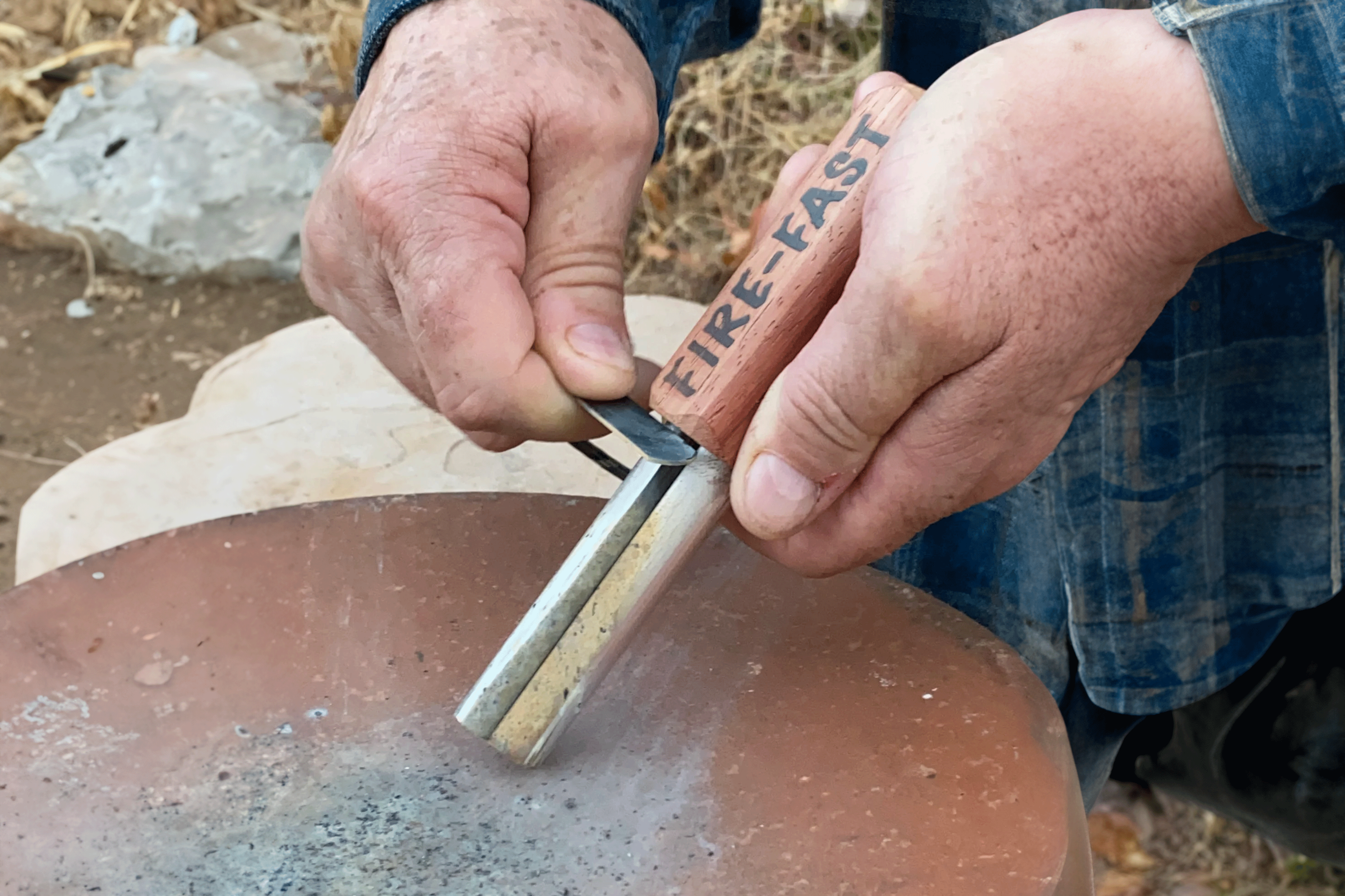
- Grip the striker firmly in your dominant hand, halfway down its length or just slightly farther.
- Grip the wood handle firmly in your other hand.
- Place the nose of the fire starter directly into the tinder so the end of the ferro rod is no more than ½ inch from the tinder.
- Hold the fire starter at a steep angle to the ground so the nose stays in the tinder.
- Hold the striker at a 45-degree angle to the ferro rod, with the striker angled away from you.
- Start the striker at the top of the ferro rod (against the base of the handle).
- First press the striker firmly inward, then scrape downward along the length of the rod with steady inward and downward pressure. Do not flick or rotate your wrist.
- Direct the sparks into the tinder and repeat as needed until it catches.
It is safe to hold your fingers within half an inch of the flint surface where the sparks are generated, provided the striker is gripped correctly.
Why Angle and Distance Matter
- Striker angle (45 degrees): The striker is sharpened flat at 90 degrees. Half of that is 45 degrees, so the working angle is 45 degrees, angled away from you. Too much variance (too steep or too shallow) causes a dramatic reduction in spark and heat.
- Distance to tinder: The hottest sparks are generated in the ¼ to ½ inch past the end of the ferro rod. Keeping the nose within ½ inch of the tinder makes “one strike, one fire” realistic with good dry tinder. Farther away and it takes many more strikes.
- Grip and pressure: Holding the striker too far back reduces pressure. Halfway down or just slightly farther is best—don’t hold it so far that sparks reach your fingers. If you’re not getting enough sparks, the most common cause is the striker angle being off 45 degrees, not lack of pressure. We’ve successfully taught 8-year-olds to light a fire with the Trekker on a dry day using proper technique.
Dry Conditions
If the natural tinder is dry, the Standard Technique will ignite it quickly and easily.
Natural tinder means fine, dry material that catches a spark easily—dry grass, leaves, thin bark, wood shavings, or similar.
Damp or Wet Conditions
On a damp or wet day you have a few options:
- Artificial tinder (camping tools): Cotton balls, dryer lint, steel wool, Vaseline-soaked materials, or commercial fire-starter cubes. These catch a spark and burn for seconds or minutes. Useful for camping, but you’ll run out on longer trips.
- Magnesium rod (built into every Fire-Fast): Scrape a quarter-sized pile of magnesium shavings using the Standard Technique. Place the pile under the tinder and shoot sparks into it. The magnesium ignites immediately and burns at about 4,500°F, helping damp tinder catch.
Practicing with natural tinder builds the skill you’ll need when prepared tinder isn’t available, or has run out.
Emergency Use Only: Scrape Wood from the Handle
If you have exhausted other options and must have a fire:
- Reverse your grip—hold the fire starter by the stem (magnesium/ferro rod end).
- Use the striker with the Standard Technique to scrape dry wood shavings from the handle.
- This is slow and can be difficult. It can take 20–40 minutes of steady scraping to build a large enough pile.
- Resist the urge to try lighting after only 10 minutes. Scrape enough to ensure you can get the fire going.
This method is reserved for true emergencies when nothing else has worked. The Trekker handle is particularly useful for this.
Faster Dry Tinder Option: Pencil Sharpener
A better everyday tool is one of our aluminum pencil sharpeners. A wet twig or stick can be “sharpened” to quickly produce dry interior wood shavings for tinder. This is faster and easier than scraping the handle and is a practical addition to any kit.
Related: Austrian vs Chinese Ferro Rods · Starting a Fire in Wet or Snowy Conditions

Written by peter van der meulen





Leave a comment
This site is protected by hCaptcha and the hCaptcha Privacy Policy and Terms of Service apply.