
Article: Fire on the Frontier: How the Old West Made Fire
Fire on the Frontier: How the Old West Made Fire
Fire on the Frontier: How Fire Was Made in the Old West, on the Cattle Trails, and Between Cultures
Fire was never optional on the American frontier. It cooked food, dried clothes, kept predators at a distance, and signaled across open country. The methods people used — and the tools they carried — tell a clear story of technology meeting necessity.
Native American Methods
Before European contact, most tribes across North America relied on friction. The most widespread technique was the simple two-stick hand drill or the more efficient bow drill. A spindle of harder wood was spun against a softer hearth board until a hot coal formed in the dust. That coal was dropped into a tinder bundle and blown into flame.
Some northern groups (Eskimo and certain Athabascan and Algonquian peoples) also used flint struck against iron pyrites — an early percussion method. But across the vast majority of the continent, friction was the standard.
These methods worked, but they required dry materials, skill, and often considerable effort. Fires were started as infrequently as possible. Once lit, fire was carefully preserved and sometimes carried as a slow-burning coal in a protective container.
European Arrival and the Flint-and-Steel Advantage
Europeans brought a decisive improvement: flint and steel. By the time of major contact, striking a piece of high-carbon steel against flint to throw sparks onto char cloth was everyday technology in Europe. It was faster, more reliable in damp conditions, and far less dependent on perfect wood.
Lewis and Clark’s expedition carried dozens of fire steels and flints as standard equipment. Journal entries show the men regarded the Indian friction methods they witnessed as interesting but slower. Many tribes recognized the superiority of the new method almost immediately. Within a generation or two, flint and steel had largely replaced the fire drill for daily use among tribes that had regular contact with traders. The old friction methods often survived only for ceremonial “new fire” rituals.
The transfer of technology was primarily one direction: Europeans introduced a better percussion system, and Native peoples adopted it because it worked.
Cattle Drives and the Working Fire
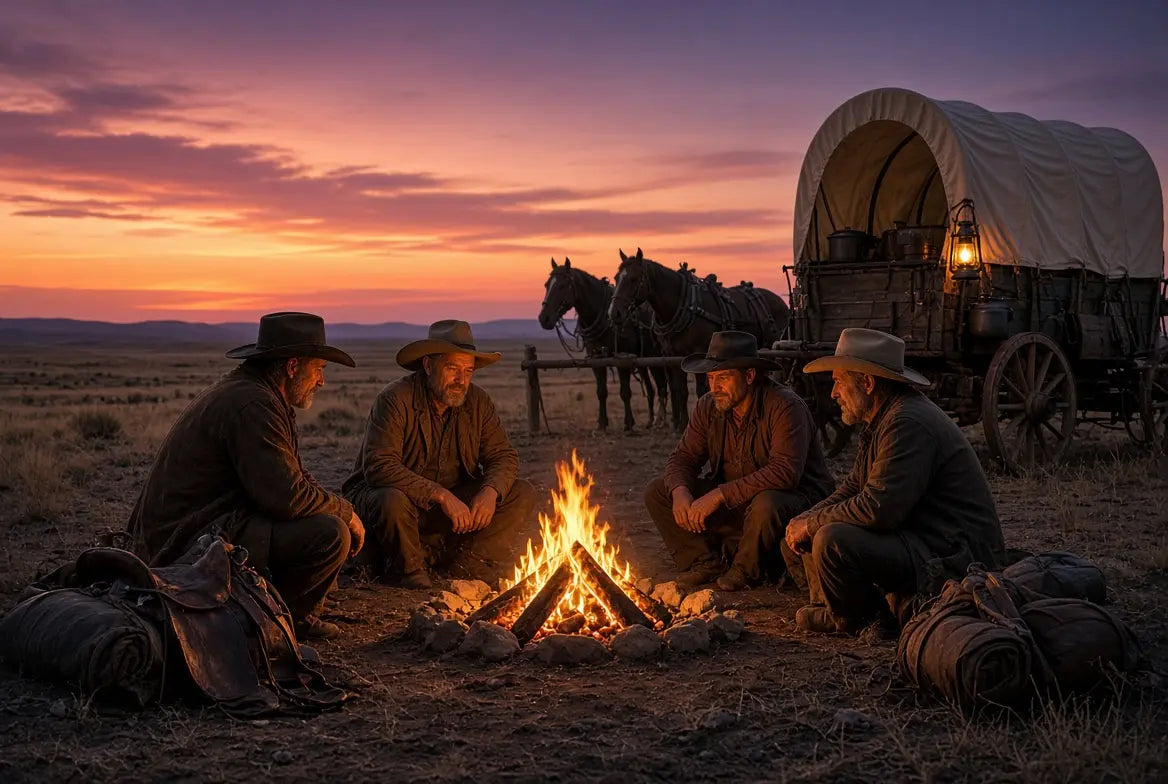
On the great cattle drives of the late 19th century, fire was the center of the evening. The chuck wagon cook built the fire that produced coffee, beans, biscuits, and the rare hot meal. Fuel was whatever the country offered — wood along the rivers, buffalo or cow chips on the open plains.
Cowboys carried flint and steel or, later, early matches in their possibles. A reliable fire kit was as essential as a good knife. Night herders needed the ability to re-light a pipe or a small warming fire without fumbling in the dark. The same principles applied: prepare your materials, protect your tinder from moisture, and never let the main fire get away from you in dry grass country.
What This History Still Teaches
The frontier record is consistent. The people who stayed warm, cooked food, and survived unexpected weather were the ones who treated fire as a skill, not a convenience. They carried redundant methods. They practiced. They understood that the best fire is the one you can make when conditions are against you.
That same thinking is why we build Fire-Fast the way we do — tools that work when the weather turns and the easy options fail.

Written by Peter Van Der Meulen



Leave a comment
This site is protected by hCaptcha and the hCaptcha Privacy Policy and Terms of Service apply.