
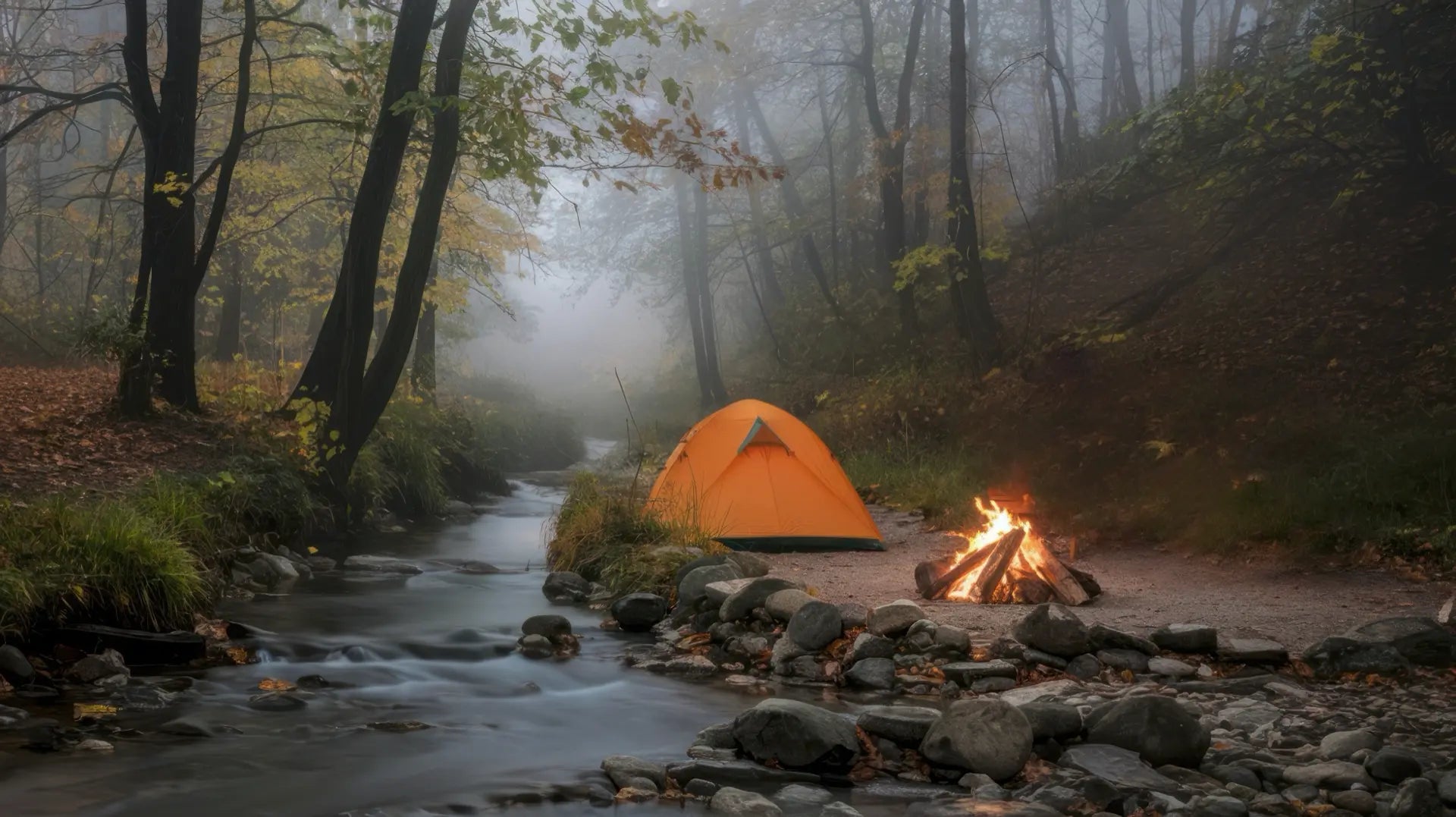
Starting a Fire in Wet or Snowy Conditions
Wet and snowy weather turns fire-starting into a more deliberate process. The sequence below is written so it can be printed and carried as a practical checklist.
Step-by-Step
- Decide when to stop On a wet or snowy day there is a strong tendency to keep hiking in order to reach a cabin or known shelter as quickly as possible. If that destination is close and reliable, pushing on can be the right decision. However, stay vigilant. Do not pass a truly good natural campsite — one with solid overhead shelter, higher ground, wind protection, and adequate fuel — just to gain a few more miles. Ending up after dark in an exposed, fuel-poor location can be far more dangerous than stopping early at a strong site.
- Stop at a good campsite Choose higher ground with natural protection. Avoid gullies, dry creek beds, and low spots where water can run or pool.
- Create shelter from rain and wind Get under a dense tree canopy, rock overhang, or fallen tree. A tarp is useful for blocking wind, but do not let it overhang the fire — it will melt or burn. You still need natural cover above the fire to keep rain from falling directly into it. High wind makes ignition extremely difficult; block it as much as possible.
- Gather and protect your materials Collect tinder, kindling, and fuel wood immediately and move everything under the shelter. Keep a small amount of dry tinder in a waterproof container or deep in a pocket from the start.
- Prepare the fire site If rocks are available, build a simple ring. Place flatter rocks on the bottom to elevate the fire slightly and keep it out of standing water.
- Produce and place your tinder Even sticks that feel damp on the outside are often dry inside. Shave thin dry slivers from the center with a sharp knife, or run wet twigs through a pencil sharpener to create fine usable material - there can be an enormous amount of dry tinder easily available. Place a generous amount of tinder at the center.
- Build the initial structure Place small twigs and sticks over and around the tinder. Have the next sizes of kindling and fuel ready.
- Ignite With a Fire-Fast ferro rod, scrape a silver-dollar-sized pile of magnesium shavings under, onto or mixed with your tinder. The mag shavings must remain in a concentrated pile for best effect. Direct the sparks into this pile. The magnesium will flare — your goal is for the tinder and fine material above it to catch and hold the flame.
- Feed the fire carefully Add material slowly. Too much too soon will smother the small flame; too little and it will die. Wet and snowy fires need steady, attentive tending until they are well established.
- Pre-dry the next wood Bring the next pieces of wood close to the heat so they can begin drying before you place them on the fire.
Resource Management Everyone on the camping trip should have a well defined role. Baring injury - setting up camp on a wet/snowy day should go like clock work and must be practiced on those fair weather days. The speed with which each task is properly completed can be the difference between survival and extinction.
Glossary Tinder – Fine, dry material that catches a spark or small flame easily (dry grass, birch bark, fatwood shavings, etc.). Kindling – Small sticks (pencil- to finger-thick) that catch from the tinder and build the fire. Fuel wood – Larger pieces of wood that sustain the fire once it is burning well. Fatwood – The resin-rich heartwood of pine trees (especially stumps or old dead pines). It is naturally full of flammable pitch, lights easily even when damp, and burns hot. Ferrocerium rod – A modern spark-producing rod (often called a ferro rod) that works when wet. Char cloth – Cloth that has been heated in a low-oxygen environment so it catches a spark easily.
Real-World Note People have gotten fires going in far worse conditions through persistence and small improvisations. Mountain men caught in blizzards sometimes nursed a single tiny coal back to life from what looked like dead ashes. Modern survivors have used everything from tent sealant to carefully shaved inner wood when everything else was soaked. The common thread is refusing to quit on the first few failures and working methodically with whatever dry material can still be found or created.
Resource Management

Written by Peter Van Der Meulen


Leave a comment
This site is protected by hCaptcha and the hCaptcha Privacy Policy and Terms of Service apply.