
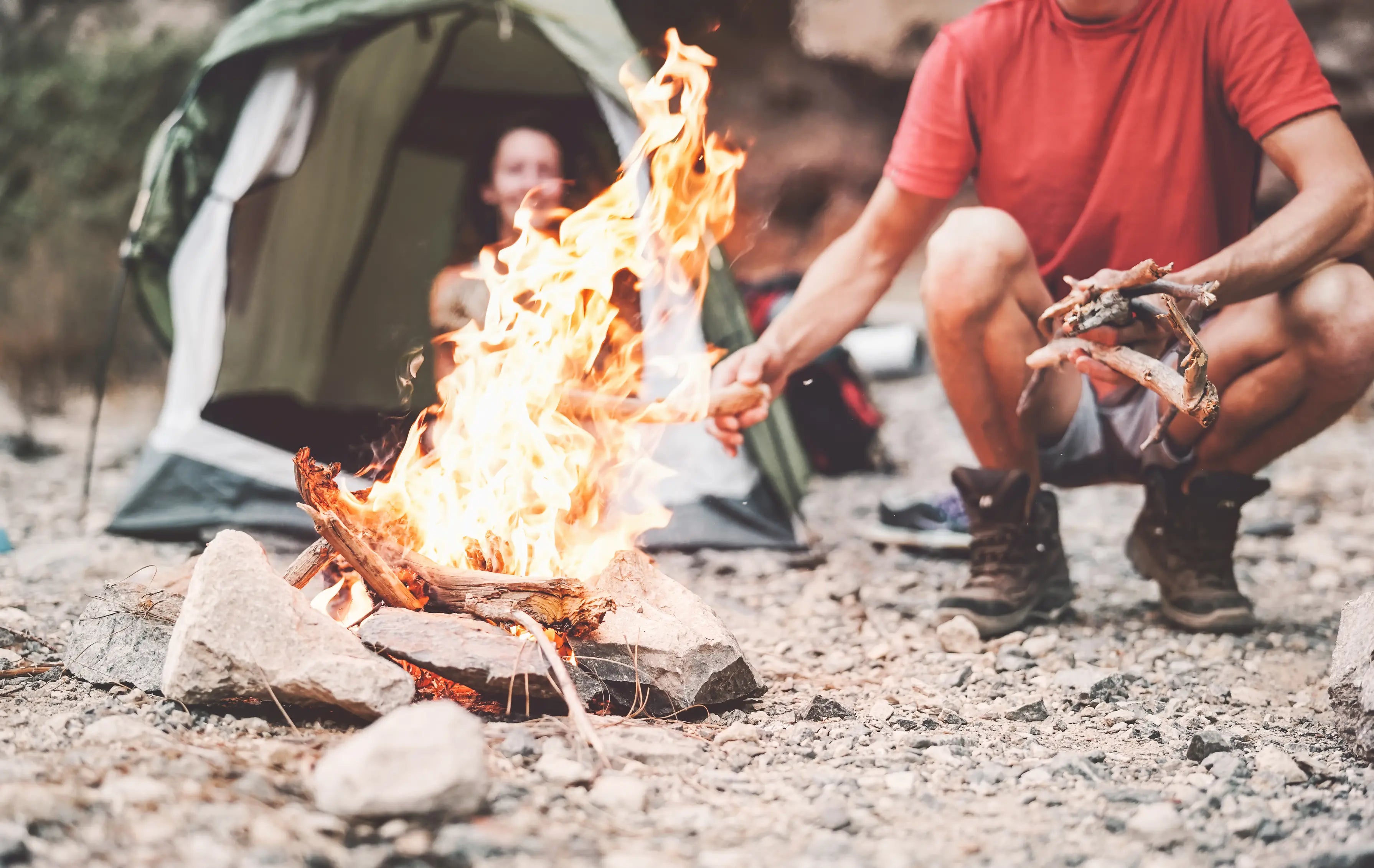
Starting a Fire in Dry Conditions
Most people camp during the drier months of the year. That makes fire-starting easier, but it also means the risk of the fire getting away from you is higher. Treat every fire as if it could spread.
Site Selection Choose a spot on bare mineral soil or an existing fire ring. Clear a wide area of dry grass, pine needles, leaves, and anything that can carry fire. Keep the fire well away from overhanging branches, tents, and gear. Have water or a pile of dirt ready before you light anything.
Materials Sort your wood into three piles and keep them separate:
- Tinder – Fine, dry material that catches a spark easily (dry grass, birch bark, fatwood shavings, cattail fluff).
- Kindling – Pencil- to finger-thick sticks.
- Fuel wood – Larger pieces that will keep the fire going.
Building and Lighting Place your tinder in the center. Build a small structure of kindling over it (teepee or lean-to style works well). Leave space for air. Use a ferrocerium rod, lighter or matches to light the tinder. Once the kindling is burning strongly, add larger wood gradually.
Safety Rules for Dry Conditions
- Never leave the fire unattended.
- Keep it only as large as you need.
- Fully extinguish it with water, stir the ashes, and drown it again until everything is cold to the touch before you leave or go to sleep.
- In dry, windy weather the danger of spread is real — stay vigilant.
A well-managed fire in dry conditions is a pleasure. A neglected one can become a disaster.
Glossary Tinder – Fine, dry material that catches a spark or small flame easily (dry grass, birch bark, fatwood shavings, etc.). Kindling – Small sticks (pencil- to finger-thick) that catch from the tinder and build the fire. Fuel wood – Larger pieces of wood that sustain the fire once it is burning well. Fatwood – The resin-rich heartwood of pine trees (especially stumps or old dead pines). It is naturally full of flammable pitch, lights easily even when damp, and burns hot. Ferrocerium rod – A modern spark-producing rod (often called a ferro rod) that works when wet.
Real-World Note Even in dry conditions, people have lost control of fires by underestimating wind or walking away “just for a minute.” The difference between a good campfire and a problem is almost always attention and complete extinguishing.

Written by Peter Van Der Meulen



Leave a comment
This site is protected by hCaptcha and the hCaptcha Privacy Policy and Terms of Service apply.