
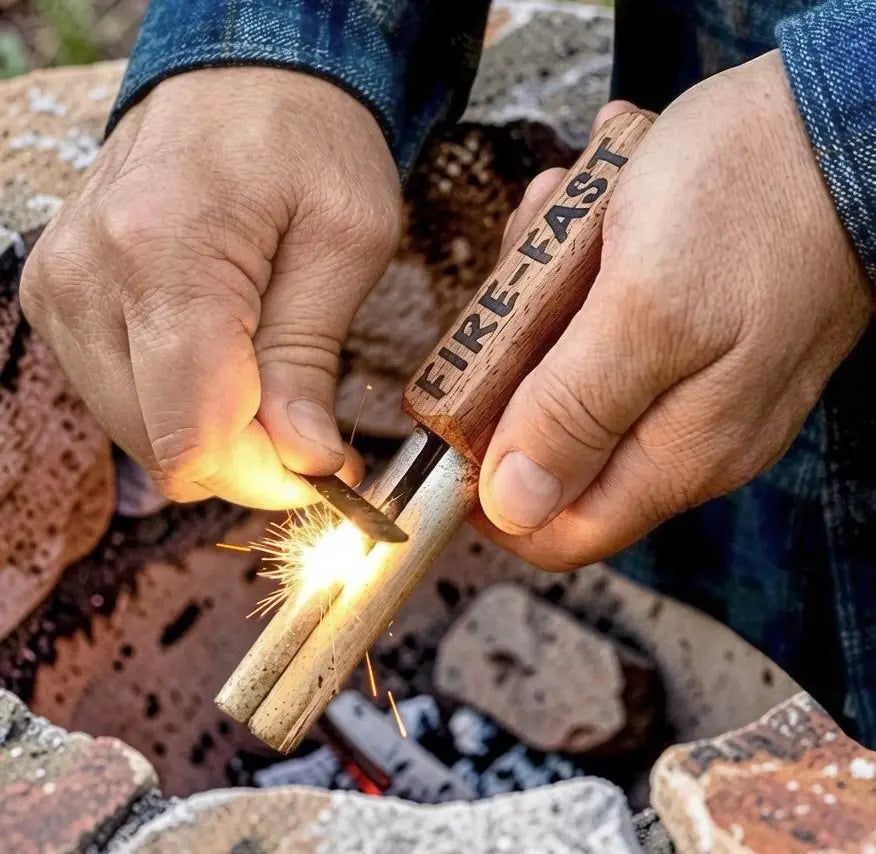
Austrian vs Chinese Ferro Rods: 76% Rare Earth Difference
Rare Earth Content Comparison (76% vs 16%)
Most “ferro rods” on the market are not the same. The difference comes down to one thing: rare earth metal content.
| Component | Austrian Ferrocerium (Fire-Fast) | Typical Chinese “Ferro Rod” |
|---|---|---|
| Rare Earth Metals | 76% | 16% |
| Iron (Fe) | 20% | 22% |
| Magnesium (Mg) | 2% | 31% |
| Plastics (Nylon + Polypropylene) | 0% | 19% |
| Other fillers | 2% anti-corrosives | ~12% |
Key Takeaway: The Austrian ferro rod requires very little pressure for an enormous amount of heat and spark. The typical Chinese ferro rod does the opposite—it requires enormous pressure for very little heat and spark.
Austrian ferrocerium (the only type Fire-Fast uses) contains 76% rare earth metals. Most Chinese rods contain only about 16% rare earth metals plus plastic and metal fillers. That difference shows up immediately in how easily and how hot the rod sparks.
If you want a ferro rod with 76% rare-earth metals instead of plastic fillers, the Trekker is the most popular one we make and use ourselves.
Why Rare Earth Metals Create Hotter Sparks
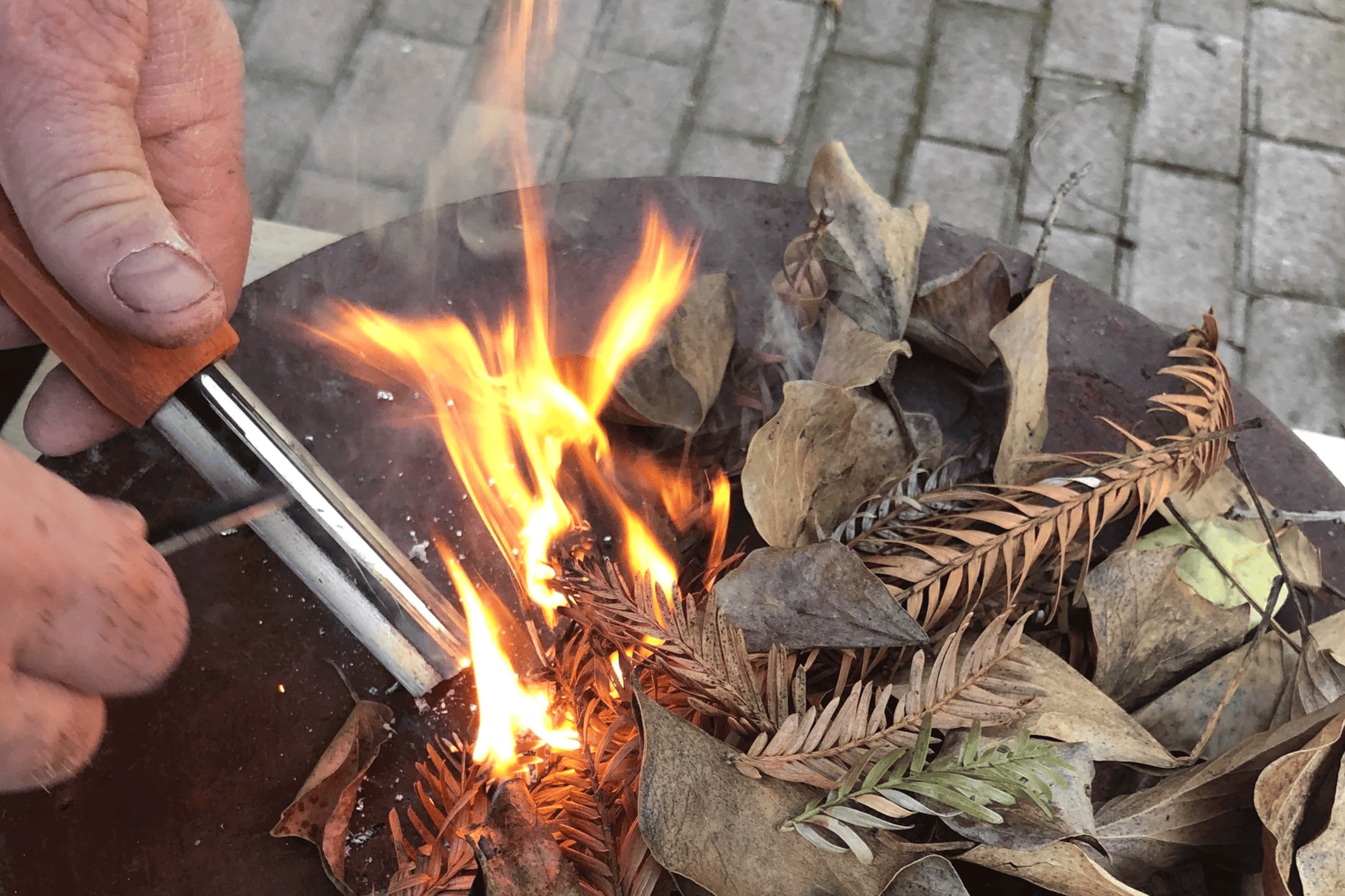
Rare earth metals are the active ingredient that creates a heavy shower of hot sparks. Austrian flints contain 76% rare earth metals. When struck with light pressure they produce a wide, intense spray that can reach temperatures up to 5,500°F.
This means faster, more reliable ignition—even on damp tinder, in wind, or below freezing. High rare-earth content also delivers thousands of consistent strikes without fading.
By contrast, Chinese versions have only about 16% rare earth metals. Without high rare-earth content the spark is weak. In real-world use these rods often require multiple hard strikes and frequently fail when conditions are less than ideal.
Plastic Fillers in Chinese Ferro Rods
Chinese “ferro rods” commonly include nylon and polypropylene (plastics totaling about 19%). These materials have no place in a true ferrocerium alloy. They lower heat output and spark volume.
The extra magnesium (often 31%) and other metals are cheap fillers. Rare earth metal is expensive, so it is reduced. The result is a rod that looks similar on the outside but performs poorly when scraped.
Why “Ferro Rod” Is Often Misleading
“Ferro rod” is a contraction of “ferrocerium.” The term is frequently used for rods that contain very little actual ferrocerium. Many people have only ever used low-grade versions and assume that weak sparks and high effort are normal.
Polished product videos rarely show wet, cold, windy, or repeated-use conditions. Fire-Fast uses only Austrian ferrocerium so the spark performance matches what you expect when it actually matters.
Real-World Performance Difference
A true high-rare-earth ferrocerium rod costs more because the rare earth metals are expensive. Cutting corners with plastic fillers keeps prices down but compromises reliability.
Fire-Fast buys its ferrocerium rods directly from the original inventor’s company—not a Chinese knock-off. The Austrian composition lights faster, burns hotter, and lasts longer with far less effort. The last place you want a weak spark is on the trail at night when a fire is the difference between a comfortable night and a cold one.
The Trekker uses only this Austrian ferrocerium. It is the most popular model we make and the one we use ourselves.
Related reading: How to use a Fire-Fast fire starter · Geek Details: Ferrocerium

Written by peter van der meulen


%0AMost%20%E2%80%9Cferro%20rods%E2%80%9D%20on%20the%20market%20are%20not%20the%20same.%20The%20difference%20comes%20down%20to%20one%20thing:%20rare%20earth%20metal%20content.%0A%0A%0A%0AComponent%0AAustrian%20Ferrocerium%20(Fir...)
2 comments
Just bought 2 of these. Totally underrated product!!!
Em
Todd Peachey
Leave a comment
This site is protected by hCaptcha and the hCaptcha Privacy Policy and Terms of Service apply.